Tampilkan postingan dengan label Czech Republic. Tampilkan semua postingan

Rabu, 08 Juli 2015

Forget Middle Earth—Central and Eastern Europe's salt mines, ice caves, mountains and castles are now on Street View

Throughout history, Europe has been a hotbed of culture, imagination and natural beauty. At Google we’re keen to share these elements with the world through our maps, so over recent months we’ve been taking all manner of Street View technologies—Trekkers, Trolleys and tripods—to capture some incredible places across the continent, focusing this time on Central and Eastern Europe. Here are a few highlights for you to explore:

Hungary
Floating down the Danube river in summertime is a wonderful thing. But now you can also check out some of Hungary’s hidden gems in Google Maps. Take a look inside the National Theatre of Pécs and explore the beautiful Basilica of Eger, the second largest church in the country. In the capital, Budapest, you can walk among the trees and rose bushes in the little-known but spectacular botanical garden near the centre of town, or even climb a hill to get away from it all.

Czech Republic
If you’re lucky enough to have been to Prague, you may have seen the fairytale sight of Prague Castle from the medieval Charles Bridge. They’re too good to miss, so we added these sites and almost 30 others in Czech Republic to Street View including the gardens of the Prague Castle, Prague’s historic center, interiors of castles such as Cesky Krumlov and Spilberk, and beauty spots like Ceske Svycarsko and Krkonose National Park.

Slovakia
In Slovakia, we’ve just released images of heritage sites like this wooden protestant church in Kezmarok and national parks like Velka Fatra and Pieniny. To get a feel for the history of the country, why not check out Branc Castle or Draskovic Castle in Cachtice? From the high turrets and battlements of the castles, you can then take a trip below ground and visit Dobsinska Ice Cave and Ochtinska Aragonite Cave which we added last year.

Romania
And finally, sink 100 meters deep into one of the most breathtaking places beneath the earth: the Turda Salt Mine, in Cluj County, Romania. Tourists around the world can take a tour of the mine—which is more than 200 years old—with our high-resolution imagery, from the comfort of their homes.


We hope you enjoy discovering some of the delights of Europe as much as we did.

Senin, 08 Desember 2014

Bringing a fresh digital vision from “New Europe” to Brussels

While Old Europe ponders its approach to the digital future, New Europe is rushing ahead to embrace the web as a motor for growth and prosperity. This past autumn, together with Financial Times, International Visegrad Fund and Res Publica, we announced the New Europe 100 list of innovators from Central and Eastern Europe.This past week, many of these entrepreneurs came to Brussels to present their ideas to the European Parliament


The event featured real-life success stories :
The European Parliament New Europe 100 event
  • Kamila Sidor, CEO, Geek Girl Carrots from Poland who runs a successful social innovation movement to encourage more women into ICT careers.
  • Michaela Jacova, Investment Manager, Neulogy VC from Slovakia, who supports aspiring talented entrepreneurs by awarding grants and matching with VC investors.
  • Paul-Andre Baran, Director, Biblionet from Romania, who helps provides free access to computers and the internet through public libraries.
  • Marcin Beme, CEO, Audioteka.pl from Poland, who founded a successful mobile platform offering digital audiobooks in Poland, Czech Republic, Hunagry , Spain, FInland, Sweden, Russia, Germany, France and Romania.
  • Gergana Passy, Digital Champion of Bulgaria, who advocates for a free access to the internet, e-skills and digital transformation across the society.
MEP Boni and Google's Vint Cerf
MEP Michal Boni, former minister for digitization in Poland, hosted the debate, which featured a keynote address from Vint Cerf, Google’s Chief Internet Evangelist. Policymakers from around New Europe attended, including MEP Janusz Lewandowski, former Polish EU Commissioner; MEP Antanas Guoga from Lithuania, and Prof. Ziga Turk of University of Ljubljana and Former Minister for Growth in Slovenia.

All listened to the entrepreneurs offering important lessons on technology­-driven innovation. Apart from sharing personal passion for ICT-driven innovation, the New Europe called on the politicians to create a positive environment for innovation. Their proposed ingredients include accepting business failures, attracting more women in ICT careers, increasing access to the Internet across the society, and simplifying rules for trading across the borders. Together, these measures represent a positive recipe for creating a true European digital single market.

Jumat, 14 November 2014

Throwing off the shackles of communism

A quarter century ago, the people of Central Europe liberated themselves, bringing down the Iron Curtain, choosing capitalism over communism, and democracy over dictatorship. This week, at an event in Prague, we unveiled ten online Google Cultural Institute exhibitions recounting the amazing and thrilling events from Poland in the north to Hungary in the south.


Communism represented an artificial transplant in Central Europe. Throughout history, the region enjoyed strong religious, economic and political ties with the West. The Museum Masaryk T.G. Lany brings its readers back to the founding ideas of democracy and freedom on which the Czechoslovak Republic was built through the legacy of the first Czechoslovak president.

All through the 1980s, pressure for change mounted. An independent free trade union called Solidarity swept through Poland at the beginning of the decade. Even though the government declared martial law to crush it, the light of freedom would only be dimmed temporarily. Dissidents appeared. Priests protested. Musicians revolted. The Czech Republic’s Vaclav Havel Library’s exhibition of black and white photographs captures not only the period of mass demonstrations in 1989 and the subsequent revolution, but also the visits and performances of cultural icons such as Frank Zappa and the US alternative troupe The Bread and Puppet Theater. For the citizens of Czechoslovakia, these first tastes of the Western world represented “the first free steps of a society.”

Starting in the spring of 1989, East Germans began fleeing to other Soviet bloc countries. The Hungarian government opened its border with Austria in May and the rush to escape was on. The Vaclav Havel Library exhibit captures the wave of citizens of the German Democratic Republic in September who inundated the surroundings of the embassy of the Federal Republic of Germany in Prague, waiting in anticipation for longed permission to travel to the West.

In June, the Polish government legalized Solidarity and held partially free elections. Solidarity won a landslide and formed the Soviet bloc’s first non-communist led government. The Polish History Museum has created an exhibit called "Tearing the Iron Curtain apart.” It includes a photo of the symbolic meeting between Poland's first non-communist Prime Minister Tadeusz Mazowiecki and the German Federal Chancellor Helmut Kohl. Another exhibition from the Julian Antonisz Foundation shows experimental art from the communist era.

In November, the Berlin Wall crumbled and millions of Czechs crowded the streets. The Muzeum umění Olomouc has prepared a selection of images from photographer Petr Zatloukal, showing a behind-the-scenes look at the November events. The Muzeum policie České republiky showcases photographs of the uniforms of the riot police on 17th November 1989, as they watched, powerless, while millions of Czechs marched for their freedom. Dissident playwright Vaclav Havel emerged from prison to become president. The photographs from the Nadace Dagmar a Václava Havlových VIZE 97 exhibit maps Havel’s extraordinary journey from 1989 to 2011.

Slovakia also won its freedom and soon broke away from Prague to achieve full independence. Its the Museum of Crimes and Victims of Communism illustrates the path to freedom through photographs of unknown heroes who participated in country's Candle Demonstration.

The sweep of the events accelerated and the shackles of communism were gone by the end of 1989, not only throughout Central Europe, but also in the Balkan countries of Romania and Bulgaria. The Balts, within the Soviet Union itself, soon would form a human chain hundreds of miles long and win back their freedom. In Hungary, the Open Society Archives, is bringing online one of the world's largest archives from the Cold War, including propaganda films and surveillance documents, samizdat and opposition activist videos, publications and posters.

Take time to browse and learn. We believe putting historical material on the Internet and organizing it in a way that allows visitors to read and understand what it felt like to be in the midst of events not only gives more people access to important material but also preserves these perspectives for future generations. Today, memories of the Cold War may be fading and it is our duty to keep them alive as a reminder of the tremendous achievements of the courageous people of Central Europe.

Poste

Rabu, 29 Oktober 2014

Supporting New Europe’s digital advances

They threw off the shackles of communism. Now they are grabbing the reigns of the technology revolution. Together with Financial Times, International Visegrad Fund and Res Publica, we announced the New Europe 100 list of innovators from Central and Eastern Europe who are leveraging new technologies to transform the region in business, media, culture, science and politics.


In announcing the project, the Financial Times noted: “central and eastern Europe say the combination of a high level of mathematical education, low overheads and a globalised, westernised young generation makes for a heady and successful mix.” We agree. The New Europe 100 winners show that this former communist region is fast moving away from its old traditional manufacturing industries. They range from “a Hungarian doctor who has created a medical advice website driven by social media, a team of Polish students who have built an award-winning robot that could operate on Mars, and a Slovak inventor of a flying car. “

Check out the whole list at http://ne100.org/ and read more about the project and its laureates in the newest Visegrad Insight. Follow it on Twitter @NewEurope100 and tag as #NE100 elsewhere.

The FT correctly notes that the the region still must overcome obstacles. Research and development activities is about one per cent of the region’s gross domestic product, according to McKinsey, the consultancy - half the rate in the western EU, and even behind 1.5 per cent in the Bric economies of Brazil, Russia, India and China.

Our hope that the New Europe 100 project will help raise the profile of the region’s innovators. Recognition from being included on the list will, we believe, bring the initiatives attention, investor interest - and perhaps even potential business partnerships.

Senin, 21 Juli 2014

Celebrating Czech culture online

Václav Havel was a playwright, essayist, poet, philosopher - and also a politician, first a leading anti-communist dissident and then president of Czechoslovakia. A new exhibit on this remarkable man just has been launched on our Cultural Institute. It shows the interior of his quirky, personalised office, full of brightly colored furniture and modern art, and recounts the trajectory of his remarkable life.
Vaclav Havel's quirky office
The new Havel exhibit is only one of a slew of new exhibitions celebrating Czech culture. Until now, the Culture Institute featured only two Czech galleries, the Kampa Museum and the National Gallery. Nine new Czech museums and organizations from all around the country have joined, bringing together up to 500 art works. Two new high definition gigapixel pictures are featured, including Jiri Sopko’s spectacular Dance. In addition to Havel, the life of the first Czechoslovak President Tomas Garrigue Masaryk is featured.
Tomas Garrigue Masaryk
Enjoy the exhibitions from the other Czech partner museums:


Along with the new Czech museum exhibits, we also launched new Street View imagery, including interiors of museums. Our launch event took place in the Decorative Arts Museum’s library.
The entrance to the Decorative Arts Museum Library
Launching the new exhibits
The venue will be closed soon due to reconstruction of its historical building - but it will remain visible and visitable online.

Selasa, 24 Desember 2013

Supporting open government in New Europe

The “New Europe” countries that joined the European Union over the past decade are moving ahead fast to use the Internet to improve transparency and open government. We recently partnered with Techsoup Global to support online projects driving forward good governance in Romania, the Czech Republic, and most recently, in Slovakia.

Techsoup Global, in partnership with the Slovak Center for Philanthropy, recently held an exciting social-startups awards ceremony Restart Slovakia 2013 in Bratislava. Slovakia’s Deputy Minister of Finance and Digital Champion Peter Pellegrini delivered keynote promoting Internet and Open Data and announced the winners of this year contest. Ambassadors from U.S., Israel and Romania and several distinguished Slovak NGOs also attended the ceremony.

Winning projects included:
  • Vzdy a vsade - Always and Everywhere - a volunteer portal offering online and anonymous psychological advice to internet users via chat.
  • Nemlcme.sk - a portal providing counsel for victims of sexual assaults.
  • Co robim - an educational online library of job careers advising young people how to choose their career paths and dream jobs.
  • Mapa zlocinu - an online map displaying various rates of criminality in different neighbourhoods.
  • Demagog.sk - a platform focused on analyzing public statements of politicians and releasing information about politicians and truthfulness of their speeches in a user-friendly format.


An award ceremony highlight was a live concert by the Diplomatic Immunity Band. The combo (shown above at an earlier gig) includes US Ambassador Theodore Sedgwick on keyboard; Israeli ambassador Alexander Ben-Zvi on conga, Romanian Ambassador Florin Vodita on electric guitar, President of Institute of Public Affairs Grigorij Meseznikov on electro acoustic guitar, and the Banska Bystrica Mayor Peter Gogola on drums. We’re delighted they found the time to make sweet music in favor of open data and data-driven innovation.

Jumat, 04 Oktober 2013

Music spreads across Europe with Google Play

Your music is supposed to be fun, but in reality it can be the exact opposite: a chore - moving files between computers, syncing across your phone and tablet, and lots and lots of wires. Google Play Music, an easier way to manage your music, offers a solution. It just has launched so you can listen to any song you want, whenever you want, on all of your devices. has just come to Czech Republic, Finland, Hungary, Liechtenstein, Netherlands, Russia and Switzerland.

All Access coverage is now spread pretty much across the entire continent. A first group of nine European countries last month received the service.


All Access is the first service of its kind that lets you store 20,000 songs from your personal music collection in the cloud for free; purchase new music from all the major record labels and thousands of indies to grow your collection; or get an unlimited pass to a huge library of music on all your devices with All Access, our monthly music subscription service. It’s all stored in the cloud so you never have to worry about losing songs or moving them again. You can add a new favorite track to your collection while you’re on your computer, and it will be instantly available on your phone and tablet. And you can “pin” all of this content to make it available on your phone or tablet when you’re offline without a connection.

All Access lets you search for and listen to any song from our library of millions of tracks, wherever and whenever you want. You can create an ad-free, interactive radio station from any song or artist you love. Or you can browse recommendations from our expert music team and explore songs by genre. The “Listen Now” tab puts artists and radio stations we think you’ll like front and center so you can start listening the minute you open your library. You can try All Access for free for the first month and pay only a modest subscription service each month after that.

With this launch, Google Play moves one step closer to being your ultimate digital entertainment destination, where you can find, enjoy and share your favourite apps, games, books, movies, magazines and music on your Android phone or tablet. Good listening.

Rabu, 17 Juli 2013

Growing our Map Maker community in Europe

Exploration is at the heart of the summer season, and what better way to take part than sharing your knowledge on the places you love on Google Maps? Today, Google Map Maker is diving into summertime by welcoming mappers of Czech Republic, Hungary, Sweden, and Bosnia and Herzegovina to our ever-growing team of citizen cartographers in our quest to map the world.

With Google Map Maker, you can contribute your local knowledge to make a more useful and comprehensive map of the changing world around us. Begin in your neighborhood and try adding the building footprints for local shops and restaurants. Then, embrace your inner traveler and enrich the maps of national parks and historic landmarks. If you’ve got the itch for adventure, try adding campgrounds, beaches or your favorite hiking trails.


View Larger Map
Jajići, Bosnia and Herzegovina was a blank space on the map
before citizen cartographers put it on the map.

Whether it’s a cycling route through Budapest or a cafe alongside Prague’s Vltava River, each improvement to the map will help locals and tourists alike as they navigate your neighborhood this summer. Once approved, your contributions will appear on Google Maps, Google Earth and Google Maps for Mobile.

To get started, join other mappers on the Google Map Maker community forum, explore the Help Centre for tips and tricks, or watch mapping in real-time with Map Maker Pulse. Now, from the Heart Shaped Land, through Central Europe, to Swedish Lapland, you can help Google Maps to embody the rich culture and spirit unique to your homeland - starting today!

Rabu, 10 Juli 2013

Hanging out with a Nobel Prize economics laureate

We believe the Internet represents the motor of the 21st century economy, and its always nice to hear a Nobel Prize winner explain how best to encourage net innovation. Czech CERGE-EI think tank recently organized a Google Hangout with Nobel Laureate for economics Eric Maskin.

The Prague setting was appropriate. The Czech Republic’s economy remains dependent on traditional manufacturing, particularly the auto industry, which accounts for nearly a quarter of Czech output. Czech policymakers regularly acknowledge the need to move toward a more high-tech, services-based, knowledge economy. How?

Professor Maskin suggested that the Czech Republic and the rest of Europe needed to be careful about imposing a heavy patent burden on the tech sector. Software, semiconductor, and computer industries have been innovative despite historically weak patent protection, he argues. “In software you don’t have single big breakthroughs, but rather a succession of many small improvements,” he explained. “If I patent a small discovery and you want to build on it, you won’t be able to do that easily - I’m going to block you with my patents.”


The Nobel Prize winner discussed these ideas, along with many others, with Czech commentators David Marek (Chief Economist, Patria Finance) and Jakub Steiner (Associate Professor, CERGE-EI). During his discussion, Professor Maskin is not an anti-patent zealot. He compared the software to the pharmaceutical industry, where he said patents could be effective. “In the case of drugs, where you have a single big breakthrough and have to spend hundreds of millions, patents have been useful for drug companies and society,” he said.

The Czech Republic, along with the rest of Europe, needs to embrace Internet innovation and Professor Maskin offers some important insights in how to construct the best possible innovation environment. We hope to hold new Hangouts from Prague to foster a healthy debate on Internet regulation.

Kamis, 27 Juni 2013

Campaigning for Innovation in Central and Eastern Europe

Two decades ago, Central and Eastern Europe threw off the shackles of communism. Today, the region is among Europe’s most dynamic, and we recently held our first Big Tent in the region to investigate how Poland, the Czech Republic, Slovakia and Hungary could play a leadership role in driving forward innovation on the web.


This newfound freedom encourages the region to embrace the Internet, Polish ministers said. “We prefer freedom,” Michal Boni, the digitisation minister, repeated twice in the keynote address. Deputy Foreign Minister Henryka Mościcka-Dendys argued that new technologies helping “civic initiatives gain wider ground for their actions.” A concrete example is opening up public data. By examining online license plate records Zuzana Wienk, a Slovak anti-corruption campaigner, demonstrated the bidding for street cleanup services was rigged.

The Internet already is driving economic progress. At the Big Tent, we showcased successful Internet startups and social innovators. They ranged from Polands’ game startup Dice+ and audio books pioneer Audioteka to Hungarys’ to K-Monitor transparency project and presentation tools developer Prezi. From Slovakia, traditional Ultra Plast plastic maker showed how to leverage its net presence to boost exports.

At the same time, the region needs to improve its education and regulation. While universities produce excellent engineers, they rank low in equipping graduates with needed business skills. Too few offerings exist for adult education. “If there is no lifelong learning, there is no lifelong earning,” quipped Jan Figel, Deputy Speaker of the Slovak Parliament. Other panelists wanted to see government change regulations to make it easier for companies to take risks, to start new businesses and to wind them down if and when they fail.

Our Big Tent took place in the wake of revelations that the U.S. intelligence agencies had conducted an online surveillance campaign. Google’s chief legal officer David Drummond stressed that the threats to the open web are not always from autocratic regimes and that any limitations to freedom online should be set narrowly. He acknowledged the dangers of online radical and racist speech. But he said that the Internet offers the best vehicle for dealing with the issue - “counter-speech” denouncing the hate.

Most of the debate had an optimistic tone, with faith in future innovation. The audience appreciated a demonstration of Google Glass. Slovakia’s Figel, who previously served as a European Commissioner, tried on a pair and checked the weather in the European Union’s capital Brussels. It was sunny outside in Warsaw - and grey and overcast in Brussels.

Rabu, 05 Juni 2013

Honoring Czech and Slovak digital journalism

Throughout Europe, we’re working with journalists to encourage the transition from paper to digital distribution. In the Czech Republic and Slovakia, we support the digital journalism awards to honor the best quality digital articles, and we’re encouraged to see how the digital news movement is gaining momentum.

A total of 351 entries were received in the Czech Republic and 685 in Slovakia, a jump of about 10 percent from the previous year. The public chose online the article that had the biggest social impact. More than 15,000 readers cast ballots. The results are visible here  Jindrich Ginter, editor of the daily Pravo, won for a series an article about financial fraud.

Winners of the Czech and Slovak digital journalism awards.
We also supported the special category - Google Digital Innovation Award for journalists who use online technologies to investigate social issues. The winners include:

Google Digital Innovation: Professional Journalism
Czech:  Hospodarske Noviny's online iHNED work on data journalism
Slovak: Daily SME's online video report titled "The Handbook of the Brain."

Google Digital Innovation: Citizen Journalism
Czech: Volunteer website Demagog's reports on politicians embellishing the truth.

Take a look above at photos of the award event. The journalism initiative was part of our Google For Czech Society campaign. Stay tuned for more activities.

Kamis, 30 Mei 2013

Expanding Google Business Photos in Europe

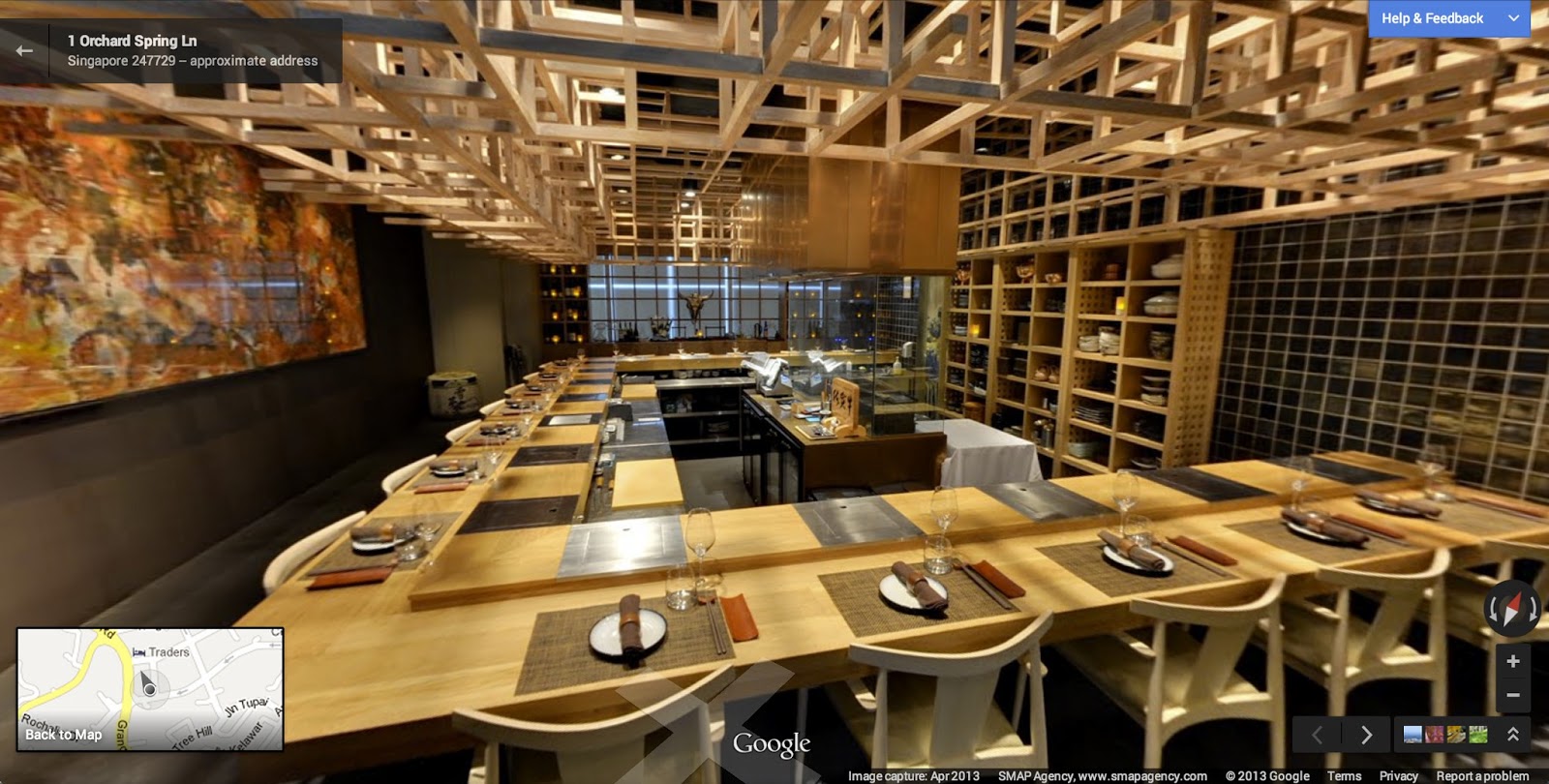
Want to show off appealing images of your business? We've just expanded Google Maps Business Photos program to six new European countries including: Belgium, Czech Republic, Germany, Poland, Russia, and Switzerland.

The Business Photos program enables merchants to create 360-degree, interactive tours of their establishments. This imagery allows potential customers to look inside and explore businesses before they go.


Are you a business owner?
If you are a business owner in any of these locations, joining the program is easy. Simply hire a Trusted Photographer or Agency to take pictures. Using Street View technology, the photographer will create panoramic images from the photo shoot and upload them. These images will be available automatically to anyone who searches for your business on Google.com, Google Maps, Google Maps for Mobile and on your Google+ page or Places for Business listing. If a local photographer isn’t yet available in your neighborhood, let us know and we’ll do our best to find a photographer for you.


Photographers can sign up...
Whether you’re a professional photographer or photography agency we’d love to have you on board! We are recruiting more Trusted Photographers and Agencies. Please visit our website for Trusted Photographers and Trusted Agencies to learn more and sign up.

Rabu, 23 Januari 2013

Freedom burns bright in Prague

Only two decades ago, the Czech Republic shook off the shackles of authoritarianism and planted the seeds of a vibrant democracy. The Velvet Revolution’s leader Vaclav Havel spoke of the “power of the powerless,” explaining how, in a society ruled by lies, truth gains a "singular, explosive, incalculable political power." Although Havel recently passed away, his powerful memory lives on, strong and steady, as made clear at a recent Google-and Open Society Fund sponsored event in Prague. A group of top ranking Czech editors met in the cozy Bar and Books to discuss the topic, “The End of Free Media.”


For the past two years, we have partnered with the Open Society Fund on a Journalism Award honoring innovative civic journalism. Our Google Digital Innovation Award celebrates the best online entry. Authors, editors, readers, viewers and listeners are encouraged to nominate interesting articles by February 2013. More info can be found here.

Our goal at Bar and Books was to share ideas about the current state of media freedom, potential threats, and steps to protect from government censorship and control. I represented Google on the panel and came away confident that the Czech Republic is a strong ally in the fight for Internet freedom. The Czech government is a founder member with the Netherlands’, Sweden, Estonia, the United States and others of the Freedom Online alliance. This December, Prague joined other European allies, in rejecting an International Telecommunications Union treaty that could open the door to authoritarian control of the Net.

The Czech capital is also home to a dedicated and broad network of freedom-loving NGOs. It was inspiring to hear from former Czech parliamentarian Oldrich Kuzilek how he has set up an association called Otevrete to encourage the government to allow access to taxpayer-funded data. Other organizations such as Transitions monitors regional trends in press freedom, while the Pasos think tank regroups 56 organizations around the region, united to promote democracy and human rights. Apologies to the NGOs omitted here for reasons of space.

We look forward to cooperating with both the Czech government and Czech civil society in order to promote Internet freedom.

Kamis, 07 Juni 2012

Honoring Czech and Slovak Journalism

Throughout Europe, we have been working hard to aid the often wrenching transition from offline to online journalism. We have forged partnerships with newspapers and newspaper associations and sponsored a series of digital journalism contests. Our latest effort comes in the Slovakia and the Czech Republic, where we worked with the Open Society Fund to support a series of journalism awards.

The Czech and Slovak Journalism awards are eight years old, so we wanted to bring something new to the event. Our answer was to create organize "public online voting” for a special Czecho-Slovak award. Our sponsorship also supported two entirely new online categories, the Google Digital Innovation for professional journalism and the Google Digital Innovation for citizen journalism.


A total of 685 entries from 409 authors too part, almost a hundred more than the previous year. Online blogs comprised the single largest share of all entries. The winners of the Google prizes are:

Google Digital Innovation: Citizen Journalism

  • Czech Winner: Mikuláš Kroupa, Michal Šmíd, Lenka Kopřivová: "A memory of the nation"
  • Slovak Winner: Editorial team SME a SME.sk - "Online updates from the day of voting about ESM and government trust"

  • Google Digital Innovation: Professional Journalism

  • Czech Winner: Petr Holub, Sabina Slonková (Aktuálně.cz): "Corruption in health system vs 'Thanks, we are leaving' campaign"
  • Slovak Winner: Martin Filko "Series of blogposts about Slovak health system"

  • Czecho-Slovak Winner of public voting (the biggest impact on society):
    Czech journalist Sabina Slonková (Aktuálně.cz): “Special investigation: Top secret salaries

    Congratulations for helping bring high-quality digital journalism to Slovak and Czech readers.

    Kamis, 17 November 2011

    A new YouTube melody for European musicians

    If you are of my generation and love Jacques Brel, it's a great day. For my kids, who adore Selah Sue and fantasy character Mega Mindy, it's also a great day. From now on, videos of these Belgian artists will become easier to find on YouTube. For the first time, these Belgian artists and their estates will receive payments for allowing music lovers to listen to their music on YouTube.


    This breakthrough stems from the licensing agreement signed today between collecting society SABAM and YouTube. SABAM was founded in 1922; it represents 36,000 composers, lyricists, publishers, and music video makers.

    Throughout Europe over the past two years, YouTube has secured similar agreements with associations representing artists and authors in countries shown in blue: the UK, France (SACEM, SACD, SCAM, ADAGP), Netherlands, Spain, Italy, Ireland, the Czech Republic, and Poland.


    These agreements end old arguments about copyright, replacing them with win-win arrangements. For Europe’s musicians, YouTube has become an indispensable tool in reaching audiences. Artists are compensated when advertisements are displayed against YouTube partner’s videos.

    The deals demonstrate our commitment to to promoting local European cultural creation. YouTube is innovating to help artists protect and manage their rights. Our state-of-the-art Content ID technologies let rights owners identify user-uploaded videos that contain their work and choose, in advance, what they want to happen when those videos are found. They can block them from YouTube altogether, or keep them up. The vast majority of right owners agree to keep their material online - and share in the revenue generated by advertising displayed against it.

    Until now, when Belgians visited YouTube, they were taken to our global site. The launch of YouTube in Belgium means Belgians will see a home page featuring a wealth of content from their home country. Partners are welcome to join us and we’re happy to learn that large Belgian media companies such as broadcaster RTBF are interested in having parts of their archives appear. For my part, I plan to catch up on Jacques Brel videos.

    Kamis, 13 Oktober 2011

    Sizing and seizing the Internet economy

    Strange as it might sound, given all the buzz about the digital economy, few concrete numbers exist measuring the Internet’s economic impact. The scarcity of hard data has allowed many to portray the Internet (at worst) as a negative force, destroying jobs, or (at best) as marginal to a country’s economic success.

    In the past year Google has worked with a variety of partners to begin filling in this data gap. The Boston Consulting Group researched a series of country-specific reports. The first found that the digital economy accounts for more than seven percent of GDP in the UK. BCG, McKinsey, and Deloitte followed up by analyzing the impact of the Internet on local economies for instance in France, Spain, Italy, Sweden, Netherlands, Czech Republic, Israel, Hong Kong and Australia.

    BCG partners David Dean and Paul Zwillenberg recently were in Brussels to present a new study - not commissioned by Google - called Turning Local: From Madrid to Moscow, the Internet is Going Native. It builds on the previous country reports, and adds additional BCG research, to describes the Internet's impact on 50 economies around the globe. BCG drew up an e-Intensity IndexTM which measures countries' Internet infrastructure, the amount of online expenditure and how enthusiastically businesses, consumers and governments engage with new technologies. By 2015, BCG projects, the Internet will contribute 7.3 percent of Danish GDP. Other countries will experience even bigger jumps during the next years. By 2015, the Internet will account for four percent of Spanish GDP, almost double 2009’s figure of 2.2 percent.


    If anything, these GDP measures may underestimate the Internet’s true impact—something BCG, McKinsey and Deloitte all acknowledge. For example, in many countries between five and 10 percent of retail sales are researched online before the consumer makes an informed purchase in a physical store, and the cost savings from shopping on the web can be substantial, amounting to almost £1,000 per household in the UK. Similarly, consumers benefit from using free, advertising supported services like email that they would otherwise have to pay to enjoy. McKinsey and IAB Europe found consumers enjoy €100 billion in consumer surplus—almost three times the revenue online advertising companies receive—none of which traditional GDP measures captures.

    Earlier this year, McKinsey specifically researched the externalities around Internet search, with collaboration and support from Google. Their independent report, Impact of Internet Technologies: Search, states that search technologies—including but not limited to Google—create over $780 billion of value for the global economy, of which only four percent accrues to the search engines themselves.

    Google and other members of the Business and Industry Advisory Committee BIAC last month participated in an expert roundtable at the OECD exploring current and future methods for measuring the impact of the Internet on the global economy. The roundtable will be followed by a report sponsored by Google that will measure the impact of the Internet on OECD member countries.

    For BCG, their studies represent only a first step. The goal is to help jumpstart a global conversation on the economic value of the Internet. In Brussels, Dean and Zwillenberg were clear in presentations made to European think tank Bruegel (of which Google is a member) that SME’s are one of the biggest groups of beneficiaries in Europe. Their research, which included a survey of over 9,000 companies, concludes that businesses using the web intensively grow significantly faster than businesses that don't. That’s a theme that we, and BCG, will be revisiting in coming weeks and months.

    Posted by Patricia Wruuck, Policy Analyst and Betsy Masiello, Policy Manager