High schools need to increase their computer science offerings and we’re eager to support. Starting today, applications are now being accepted for the 2015 Google Computer Science for High School Awards. Universities who meet our eligibility criteria can apply for an award of up to $15,000. Apply before midnight (GMT), February 20th, 2015.
High school computer science courses face challenges throughout Europe, the Middle East and Africa. Many teachers can have limited access to training and curriculum resources, struggle to keep up with fast changing technology or have difficulty demonstrating that computer science can be a rewarding and “cool” career choice.
Google’s Computer Science for High School Awards connects school teachers with university academics, who can provide them with the training and tools. Since its pilot in 2009, the program has sustained computer science teacher professional development and helped inspire a new generation of computer scientists who will build the apps and programs of the future.
To date, our program has trained more than 12,263 teachers, reaching an estimated 613,150 students in more than 230 locations worldwide. In 2014, we supported 26 university-led education projects in 20 countries - with projects ranging from SCRATCH and Raspberry Pi teacher workshops in Europe to android and robotics programming workshops for female students in the Middle-East.
We have resources for teachers to get ongoing, year-round help. Our Google+ Community page hosts Hangouts on Air with Computer Science industry leaders, Googlers, and top educators on a regular basis and we have a resources page with online workshops, tutorials and information on computational thinking, robotics and more.
This year we've added a new computer science custom search for additional materials (such as lesson plans, tutorials, activities, and videos) to support classroom activity, after school programs, or for home enrichment. Our ultimate goal is ambitious — to “train the trainer,” develop a thriving community of high school Computer Science teachers, and above all, engage pre-university students about the awe and beauty of computing.
Tampilkan postingan dengan label STEM Education. Tampilkan semua postingan
Tampilkan postingan dengan label STEM Education. Tampilkan semua postingan
Selasa, 09 Desember 2014

Kamis, 04 Desember 2014
Coding for democracy in Europe
It was an audacious task - write software that would increase democratic participation in Europe. At a time when polls show increasing public disenchantment with traditional European Union institutions, the latest and 4th edition of the EUhackathon focused on getting European citizens more involved in the EU policymaking progress.
A total of 41 coders from all over Europe participated this week in Brussels. In addition to Google, Facebook, ICANN and Netflix sponsored the event.
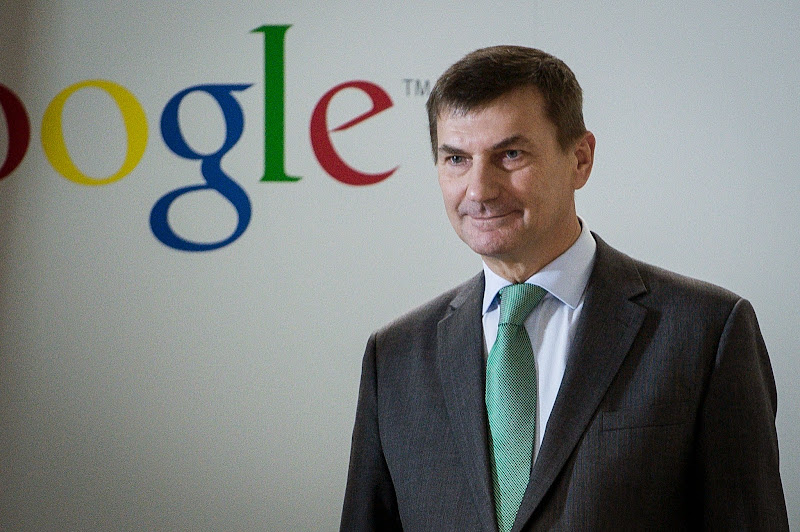
Andrus Ansip, European Commission Vice-President for the Digital Single Market, and Alexander De Croo, Belgian Vice-Prime Minister and Minister for the Digital Agenda, visited the coders at the Google Brussels office. Google Vice President and Internet evangelist (and “father” of the Internet) Vint Cerf, offered additional encouragement.
After 30 hours of intense coding with only a single four-hour break, the jury heard presentations of the projects. The prize giving ceremony took place at the European Parliament – MEPs Julia Reda, Andrey Novakov, Brando Benifei, Eva Paunova and Marietje Schaake announced the winners:
A total of 41 coders from all over Europe participated this week in Brussels. In addition to Google, Facebook, ICANN and Netflix sponsored the event.
Andrus Ansip, European Commission Vice-President for the Digital Single Market, and Alexander De Croo, Belgian Vice-Prime Minister and Minister for the Digital Agenda, visited the coders at the Google Brussels office. Google Vice President and Internet evangelist (and “father” of the Internet) Vint Cerf, offered additional encouragement.

 |
| Belgian Minister Alexander De Croo and European Commissioner Andrus Ansip |
 |
| Vint Cerf with Commissioner Ansip |
- First Prize: Team Videodock (the Netherlands), created a cool search for finding videos of parliamentary debates.
- Second Prize: Team Commission Today (Romania/Germany/USA), created a transparency register of the meetings of the EU Commission.
- Third Prize: Team Frontwise (the Netherlands),developed a tool to make easier to access to EU public consultations.
 |
| The winning Dutch team receives their prize |
Selasa, 04 November 2014
Teaching children to program robots
"Programming is child’s play." That’s the motto of our new German cloud platform Open Roberta which simplifies programming for small robots for both teachers and students.
Its a priority to encourage students to program - and indeed in the rest of Europe. Every year, the German Federal Association for Information Technology, Telecommunications and New Media estimates that Germany lacks 39,000 trained IT experts. Initiatives like Open Roberta are designed to fill this gap, allowing students and teachers to start programming with ease - and enjoy it by making learning into a fun game.
This Open Roberta cloud-based platform allows school kids to program LEGO® MINDSTORMS® robots and control them using mobile devices. The cloud-based approach makes it simple to open the Open Roberta website and get started right away, eliminating the need for any installation or regular updating of PC software.


Researchers at Google and Fraunhofer IAIS have been collaborating since the spring of 2013 on ways to simplify programming of these little robots. The aim was to minimize technical hurdles for both students and the 1,000 certified 'Roberta Teachers'. Our solution with Open Roberta is to put the software in the cloud and open source it. Google.org provided Fraunhofer IAIS the necessary EUR1 million in funding to develop the new program. In parallel with the launch of the platform, LEGO Education introduced 160 all-new kits to be given in ten-packs to schools in the 16 German states.
Open Roberta makes it possible for kids to work on their programming projects both at school and at home, share them with others, and tinker away on them together – anywhere and anytime. At the same time, this approach is of particular advantage to schools, which often do not have enough computers for all their students.
Tutorials soon will be available for teachers on using Open Roberta in ways that meet the diverging interests of girls and boys. We at Google are proud to be supporting this initiative. Additional information is posted at open-roberta.org. To get started with programming, just visit the Open Roberta Lab at lab.open-roberta.org ... and unleash the robots!
Its a priority to encourage students to program - and indeed in the rest of Europe. Every year, the German Federal Association for Information Technology, Telecommunications and New Media estimates that Germany lacks 39,000 trained IT experts. Initiatives like Open Roberta are designed to fill this gap, allowing students and teachers to start programming with ease - and enjoy it by making learning into a fun game.
This Open Roberta cloud-based platform allows school kids to program LEGO® MINDSTORMS® robots and control them using mobile devices. The cloud-based approach makes it simple to open the Open Roberta website and get started right away, eliminating the need for any installation or regular updating of PC software.


Researchers at Google and Fraunhofer IAIS have been collaborating since the spring of 2013 on ways to simplify programming of these little robots. The aim was to minimize technical hurdles for both students and the 1,000 certified 'Roberta Teachers'. Our solution with Open Roberta is to put the software in the cloud and open source it. Google.org provided Fraunhofer IAIS the necessary EUR1 million in funding to develop the new program. In parallel with the launch of the platform, LEGO Education introduced 160 all-new kits to be given in ten-packs to schools in the 16 German states.
Open Roberta makes it possible for kids to work on their programming projects both at school and at home, share them with others, and tinker away on them together – anywhere and anytime. At the same time, this approach is of particular advantage to schools, which often do not have enough computers for all their students.
Tutorials soon will be available for teachers on using Open Roberta in ways that meet the diverging interests of girls and boys. We at Google are proud to be supporting this initiative. Additional information is posted at open-roberta.org. To get started with programming, just visit the Open Roberta Lab at lab.open-roberta.org ... and unleash the robots!
Rabu, 29 Oktober 2014
Supporting New Europe’s digital advances
They threw off the shackles of communism. Now they are grabbing the reigns of the technology revolution. Together with Financial Times, International Visegrad Fund and Res Publica, we announced the New Europe 100 list of innovators from Central and Eastern Europe who are leveraging new technologies to transform the region in business, media, culture, science and politics.
.png)
In announcing the project, the Financial Times noted: “central and eastern Europe say the combination of a high level of mathematical education, low overheads and a globalised, westernised young generation makes for a heady and successful mix.” We agree. The New Europe 100 winners show that this former communist region is fast moving away from its old traditional manufacturing industries. They range from “a Hungarian doctor who has created a medical advice website driven by social media, a team of Polish students who have built an award-winning robot that could operate on Mars, and a Slovak inventor of a flying car. “
Check out the whole list at http://ne100.org/ and read more about the project and its laureates in the newest Visegrad Insight. Follow it on Twitter @NewEurope100 and tag as #NE100 elsewhere.
The FT correctly notes that the the region still must overcome obstacles. Research and development activities is about one per cent of the region’s gross domestic product, according to McKinsey, the consultancy - half the rate in the western EU, and even behind 1.5 per cent in the Bric economies of Brazil, Russia, India and China.
Our hope that the New Europe 100 project will help raise the profile of the region’s innovators. Recognition from being included on the list will, we believe, bring the initiatives attention, investor interest - and perhaps even potential business partnerships.
.png)
In announcing the project, the Financial Times noted: “central and eastern Europe say the combination of a high level of mathematical education, low overheads and a globalised, westernised young generation makes for a heady and successful mix.” We agree. The New Europe 100 winners show that this former communist region is fast moving away from its old traditional manufacturing industries. They range from “a Hungarian doctor who has created a medical advice website driven by social media, a team of Polish students who have built an award-winning robot that could operate on Mars, and a Slovak inventor of a flying car. “
Check out the whole list at http://ne100.org/ and read more about the project and its laureates in the newest Visegrad Insight. Follow it on Twitter @NewEurope100 and tag as #NE100 elsewhere.
The FT correctly notes that the the region still must overcome obstacles. Research and development activities is about one per cent of the region’s gross domestic product, according to McKinsey, the consultancy - half the rate in the western EU, and even behind 1.5 per cent in the Bric economies of Brazil, Russia, India and China.
Our hope that the New Europe 100 project will help raise the profile of the region’s innovators. Recognition from being included on the list will, we believe, bring the initiatives attention, investor interest - and perhaps even potential business partnerships.
Kamis, 23 Oktober 2014
Teaming up with Oxford University on Artificial Intelligence
It is a really exciting time for Artificial Intelligence research these days, and progress is being made on many fronts including image recognition and natural language understanding. Today we are delighted to announce a partnership with Oxford University to accelerate Google’s research efforts in these areas.
Google DeepMind will be working with two of Oxford’s cutting edge Artificial Intelligence research teams. Prof Nando de Freitas, Prof Phil Blunsom, Dr Edward Grefenstette and Dr Karl Moritz Hermann, who teamed up earlier this year to co-found Dark Blue Labs, are four world leading experts in the use of deep learning for natural language understanding. They will be spearheading efforts to enable machines to better understand what users are saying to them.
Also joining the DeepMind team will be Dr Karen Simonyan, Max Jaderberg and Prof Andrew Zisserman, one of the world’s foremost experts on computer vision systems, a Fellow of the Royal Society, and the only person to have been awarded the prestigious Marr Prize three times. As co-founders of Vision Factory, their aim was to improve visual recognition systems using deep learning. Dr Simonyan and Prof Zisserman developed one of the winning systems at the recent 2014 ImageNet competition, which is regarded as the most competitive and prestigious image recognition contest in the world.
Google DeepMind has hired all seven founders of these startups with the three professors holding joint appointments at Oxford University where they will continue to spend part of their time. These exciting partnerships underline how committed Google DeepMind is to supporting the development of UK academia and the growth of strong scientific research labs.
As a part of the collaboration, Google DeepMind will be making a substantial contribution to establish a research partnership with the Computer Science Department and the Engineering Department at Oxford University, which will include a program of student internships and a series of joint lectures and workshops to share knowledge and expertise.
We are thrilled to welcome these extremely talented machine learning researchers to the Google DeepMind team and are excited about the potential impact of the advances their research will bring.
 |
| The Oxford skyline. Credit Oxford University Images |
Also joining the DeepMind team will be Dr Karen Simonyan, Max Jaderberg and Prof Andrew Zisserman, one of the world’s foremost experts on computer vision systems, a Fellow of the Royal Society, and the only person to have been awarded the prestigious Marr Prize three times. As co-founders of Vision Factory, their aim was to improve visual recognition systems using deep learning. Dr Simonyan and Prof Zisserman developed one of the winning systems at the recent 2014 ImageNet competition, which is regarded as the most competitive and prestigious image recognition contest in the world.
Google DeepMind has hired all seven founders of these startups with the three professors holding joint appointments at Oxford University where they will continue to spend part of their time. These exciting partnerships underline how committed Google DeepMind is to supporting the development of UK academia and the growth of strong scientific research labs.
As a part of the collaboration, Google DeepMind will be making a substantial contribution to establish a research partnership with the Computer Science Department and the Engineering Department at Oxford University, which will include a program of student internships and a series of joint lectures and workshops to share knowledge and expertise.
We are thrilled to welcome these extremely talented machine learning researchers to the Google DeepMind team and are excited about the potential impact of the advances their research will bring.
Kamis, 16 Oktober 2014
Google Summer of Code 2015 and Google Code-in 2014 are on!
A call to all students in Europe: if you have ever thought it would be cool to write code, then please keep reading. We're excited to announce the next editions of two programs designed to introduce students to open source software development, Google Summer of Code for university students and Google Code-in for 13-17 year old high schoolers.

Google Code-in is an international, online contest designed to introduce pre-university students to the world of open source development. When you read the term open source, do you think:
If you’re a high schooler and you've wondered about any of these questions, then we hope you will join in the fun and excitement. Over the past four years, we have had 1,575 students from 78 countries in the contest. This year we hope to surpass 2,000 students.
Visit the Frequently Asked Questions page on the Google Code-in site for details on how to sign up and participate. We will announce the open source organizations that will be participating in the contest on November 12. The Code-in contest starts on December 1.
Google Summer of Code
Google Summer of Code offers student developers summer stipends to write code for various open source projects. Over the past 10 years, over 8,300 mentors and 8,500 student developers in 101 countries have produced a stunning 55 million lines of code.
Google Code-in
Google Code-in is an international, online contest designed to introduce pre-university students to the world of open source development. When you read the term open source, do you think:
- What is open source?
- What types of work do open source projects do?
- I’ve only taken one computer science class, can I contribute to an open source project?
- I’m not really into coding, how else can I contribute to open source?
- I’ve never participated in open source or an online contest before, can someone help guide me?
- Open source sounds fun, how can I get started?
Visit the Frequently Asked Questions page on the Google Code-in site for details on how to sign up and participate. We will announce the open source organizations that will be participating in the contest on November 12. The Code-in contest starts on December 1.
Google Summer of Code
Google Summer of Code offers student developers summer stipends to write code for various open source projects. Over the past 10 years, over 8,300 mentors and 8,500 student developers in 101 countries have produced a stunning 55 million lines of code.
If you know of a university student that would be interested in working on open source projects this summer, or if you know of an organization that might want to mentor students to work on their open source projects, please direct them to our Google Summer of Code 2015 website. Stay tuned for more details!
Posted by Stephanie Taylor and Carol Smith, Open Source Programs
Rabu, 08 Oktober 2014
Supporting Europe Code Week
The European Commission estimates that more than 900,000 high tech jobs will go unfilled in 2020. While digital competency is one of the most important prerequisites for getting a job, too few students are studying computing. We want to help fill this gap. In order to encourage more school age students to learn about computing, we’re participating in the European Commission initiative, Europe Code Week, which takes place Oct 11-17.
We’re providing small grants to organizations who are running events in nearly a dozen countries, from Spain to Slovenia. In Sevilla, Programamos is going to teach 100 students to code. In Athens, we’re supporting coding workshops for underprivileged girls with Greek Geekettes. Other innovative projects range from Atelier-Gouter du Code, which is bringing coding workshops to students in underprivileged areas of Marseilles, France, to Python for Everyone through the University of Ljubljana.
An important priority in this year’s event is encouraging girls to explore computer science. We are coordinating Hangouts on Air interviews, hosting female Google engineers from across the continent to show children, especially girls, role models in the tech field. Tune in to +Europe Code Week’s Google+ Page.
Click on Code Week’s events page to see all the different opportunities to participate in this celebration of computer science.
We’re providing small grants to organizations who are running events in nearly a dozen countries, from Spain to Slovenia. In Sevilla, Programamos is going to teach 100 students to code. In Athens, we’re supporting coding workshops for underprivileged girls with Greek Geekettes. Other innovative projects range from Atelier-Gouter du Code, which is bringing coding workshops to students in underprivileged areas of Marseilles, France, to Python for Everyone through the University of Ljubljana.
An important priority in this year’s event is encouraging girls to explore computer science. We are coordinating Hangouts on Air interviews, hosting female Google engineers from across the continent to show children, especially girls, role models in the tech field. Tune in to +Europe Code Week’s Google+ Page.
Click on Code Week’s events page to see all the different opportunities to participate in this celebration of computer science.
Kamis, 11 September 2014
Calling women coders - apply for the Ada Awards
Fewer than one in ten computer science graduates in Europe are female. In order to improve on this dismal rate, we are sponsoring the 2014 European Ada Awards.
The Awards, affectionately known as the “Adas,” are named in honor of Ada Lovelace, a 19th-century English mathematician, considered by many to be the world’s first computer programmer and the first to envisage computing’s true potential.
It’s the second edition of the awards. The European Commission launched the Ada Awards in June, 2013 as part of its pledge to improve Digital Skills and Jobs in Europe. Three awards are given out - the Digital Girl of the Year, the Digital Woman of the Year , and the Digital Impact Organisation of the Year. Nominations are valid from across the European Union and reflect a broad spectrum of digital fields – academia, research, industry, enterprise and creative.
“Tomorrow's world will be driven by digital technology, and having digital skills will
open a goldmine of opportunities. I want women to be in the goldmine,” Neelie Kroes European Commission Vice President responsible for the Digital Agenda, said at last year’s award ceremonies.
Please note the award agenda:
Deadline for Nominations: September 16, 2014
Finalist Announcement: October 6, 2014
Rome Award Ceremony: October 30, 2014
Additional information and nomination forms are available at AdaAwards.com.

The Awards, affectionately known as the “Adas,” are named in honor of Ada Lovelace, a 19th-century English mathematician, considered by many to be the world’s first computer programmer and the first to envisage computing’s true potential.
It’s the second edition of the awards. The European Commission launched the Ada Awards in June, 2013 as part of its pledge to improve Digital Skills and Jobs in Europe. Three awards are given out - the Digital Girl of the Year, the Digital Woman of the Year , and the Digital Impact Organisation of the Year. Nominations are valid from across the European Union and reflect a broad spectrum of digital fields – academia, research, industry, enterprise and creative.
“Tomorrow's world will be driven by digital technology, and having digital skills will
open a goldmine of opportunities. I want women to be in the goldmine,” Neelie Kroes European Commission Vice President responsible for the Digital Agenda, said at last year’s award ceremonies.
Please note the award agenda:
Deadline for Nominations: September 16, 2014
Finalist Announcement: October 6, 2014
Rome Award Ceremony: October 30, 2014
Additional information and nomination forms are available at AdaAwards.com.
Rabu, 03 September 2014
Connecting schools around the globe with the Pope
As a bishop in his native Buenos Aires, Pope Francis founded "Escuela de Vecinos" (Neighbor Schools) and "Escuelas Hermanas" (Sister Schools) to allow students in richer and poorer neighborhoods to share their concerns. Today, at the Vatican, a new project was announced, using the Internet and Google tools, allowing students from around the world to communicate. The Pope himself tomorrow will publicly present the new platform.
The initiative, Scholas, seeks to connect schools all over the globe, so that they may learn from one another, share projects and find volunteers to make these projects a reality. Scholas Occurrentes integrates Google Apps for Education.
“Technology and Education are key in tackling the roots of violence”, said Jose María del Corral, Scholas's CoFounder at the press conference held this morning. We are helping "take down the physical barriers and prejudices that stand in the way of peace." Google's Managing Director for Spanish-speaking Latin America Adriana Noreña and representatives of Globant and Line64, responsible for the site´s design and programming, joined him at the Vatican launch.
The initiative comes after a Vatican-sponsored education congress and a soccer match for World Peace held earlier this week, for which Pope Francis I personally invited some of the best soccer players.
The initiative, Scholas, seeks to connect schools all over the globe, so that they may learn from one another, share projects and find volunteers to make these projects a reality. Scholas Occurrentes integrates Google Apps for Education.
“Technology and Education are key in tackling the roots of violence”, said Jose María del Corral, Scholas's CoFounder at the press conference held this morning. We are helping "take down the physical barriers and prejudices that stand in the way of peace." Google's Managing Director for Spanish-speaking Latin America Adriana Noreña and representatives of Globant and Line64, responsible for the site´s design and programming, joined him at the Vatican launch.
The initiative comes after a Vatican-sponsored education congress and a soccer match for World Peace held earlier this week, for which Pope Francis I personally invited some of the best soccer players.
Senin, 18 Agustus 2014
Inspire kids to create our future: Apply for a 2015 RISE Award
Technology has the power to change the world for the better, but today far too few have access to the education or encouragement they need to become creators, not just consumers. We know that pre-university exposure to Computer Science education is critically important for inspiring kids to pursue a career in computing.
That’s why Google offers the RISE Awards -- grants of $15,000 to $50,000 USD -- to organisations across the globe working to promote access to Computer Science education for girls and underrepresented minorities. Our RISE partners are changemakers: they engage, educate, and excite students about computing through extracurricular outreach.
In 2014, 42 organisations received RISE Awards—with projects ranging from coding clubs in Europe to web development camps in Sub-Saharan Africa. In April, we brought all of our partners together for a Global Summit that sparked resource sharing and collaboration amongst organisations.
We’re looking for more partners in 2015. Submit your application by September 30, 2014 in English, French, Japanese, Russian or Spanish. All eligibility information is listed on our website.

That’s why Google offers the RISE Awards -- grants of $15,000 to $50,000 USD -- to organisations across the globe working to promote access to Computer Science education for girls and underrepresented minorities. Our RISE partners are changemakers: they engage, educate, and excite students about computing through extracurricular outreach.
In 2014, 42 organisations received RISE Awards—with projects ranging from coding clubs in Europe to web development camps in Sub-Saharan Africa. In April, we brought all of our partners together for a Global Summit that sparked resource sharing and collaboration amongst organisations.
We’re looking for more partners in 2015. Submit your application by September 30, 2014 in English, French, Japanese, Russian or Spanish. All eligibility information is listed on our website.

Minggu, 27 April 2014
Encouraging schools to teach computer science
We recently told you about CS4HS, our program for high school and middle school computer science teachers. Today, there’s some additional news to share: the winners of our 2014 Europe, the Middle East and Africa CS4HS awards.
Twenty-six computer science education projects, from across 20 countries in Europe, Middle East and Africa, were chosen. All address training of computer science teachers in secondary schools and aim to spread best practice amongst educators.
Among the winners, the University of Stuttgart will host a teacher training workshop introducing computer science topics. Technion – Israel’s leading Institute of Technology — will give teachers access to a collaborative educational site featuring successful lesson plans and classroom idea. Kenya's Maseno University will offer sessions on mobile application development and IT leaders will be invited to discuss the value of a computer science degree and potential career paths.
Visit www.cs4hs.com to find out more and to access teacher resources such as online workshops, tutorials and information on computational thinking. Ongoing, year-round help is available by joining our Google+ Community which hosts Hangouts on Air with CS industry leaders, Googlers, and top educators. Our ultimate goal is ambitious — to “train the trainer,” develop a thriving community of high school Computer Science teachers, and above all, engage pre-university students about the awe and beauty of computing.
Twenty-six computer science education projects, from across 20 countries in Europe, Middle East and Africa, were chosen. All address training of computer science teachers in secondary schools and aim to spread best practice amongst educators.
Among the winners, the University of Stuttgart will host a teacher training workshop introducing computer science topics. Technion – Israel’s leading Institute of Technology — will give teachers access to a collaborative educational site featuring successful lesson plans and classroom idea. Kenya's Maseno University will offer sessions on mobile application development and IT leaders will be invited to discuss the value of a computer science degree and potential career paths.
Visit www.cs4hs.com to find out more and to access teacher resources such as online workshops, tutorials and information on computational thinking. Ongoing, year-round help is available by joining our Google+ Community which hosts Hangouts on Air with CS industry leaders, Googlers, and top educators. Our ultimate goal is ambitious — to “train the trainer,” develop a thriving community of high school Computer Science teachers, and above all, engage pre-university students about the awe and beauty of computing.
Selasa, 04 Februari 2014
2014 RISE Awards: Supporting computer science education
"We need more kids falling in love with science and math.” Our CEO Larry Page said this at last year's Google Developers I/O event, and it's a feeling shared by all of us. We want to inspire young people around the world, and so five years ago we created the Google RISE (Roots in Science and Engineering) Awards, which provides funding to organisations around the world that engage girls and underrepresented students in extracurricular computer science programs.
This year, the RISE Awards are providing $1.5 million to 42 organizations in 19 countries that provide students with the resources they need to succeed in the field. Ten winners come from Europe. They range from Generating Genius in the U.K. which provides after-school computer science programs and mentoring to prepare high-achieving students from disadvantaged communities for admission into top universities to Mezon in Russia, which operates a learning center for educational robotics, developing curriculum for senior school teachers. Visit our site for a full list of our RISE Award recipients.
.jpg)
This year we’re also expanding the program with the RISE Partnership Awards. These awards aim to encourage collaboration across organizations in pursuit of a shared goal of increasing global participation in computer science. For example, more than 5,000 girls in sub-Saharan Africa will learn computer science as a result of a partnership between the Harlem based program ELITE and the WAAW Foundation in Nigeria.
We’re proud to help these organisations inspire the next generation of computer scientists.
This year, the RISE Awards are providing $1.5 million to 42 organizations in 19 countries that provide students with the resources they need to succeed in the field. Ten winners come from Europe. They range from Generating Genius in the U.K. which provides after-school computer science programs and mentoring to prepare high-achieving students from disadvantaged communities for admission into top universities to Mezon in Russia, which operates a learning center for educational robotics, developing curriculum for senior school teachers. Visit our site for a full list of our RISE Award recipients.
Created in 2007, the Children’s University Foundation has been carrying out educational programs for more than 20,000 children aged 6-13. Click on the photo to learn more about this and other RISE Awardees.
This year we’re also expanding the program with the RISE Partnership Awards. These awards aim to encourage collaboration across organizations in pursuit of a shared goal of increasing global participation in computer science. For example, more than 5,000 girls in sub-Saharan Africa will learn computer science as a result of a partnership between the Harlem based program ELITE and the WAAW Foundation in Nigeria.
We’re proud to help these organisations inspire the next generation of computer scientists.
Senin, 20 Januari 2014
Help train the next generation of computer scientists
Developing computer science and STEM skills is something that should start at an early age. That’s why we’ve been supporting efforts like the RISE Awards and Raspberry Pi to help inspire a new generation of computer scientists who will build the apps and programs of the future. We are passionate about improving the way computer science is taught in schools and believe that every student in every school should have the opportunity to learn computer science.
We are pleased to announce that applications are now open for the 2014 Google CS4HS (Computer Science for High School) award program. The program funds universities to work with local high schools to give teachers the training and tools they need to bring computer science and computational thinking into the classroom. Apply before midnight GMT, February 17th, 2014 via www.cs4hs.com.
Throughout Europe, the Middle East and Africa, many high schools have limited access to training and curriculum resources. Teachers often struggle to keep up with fast changing technology and they have difficulty demonstrating that computer science can be a rewarding and “cool” career choice. The Google CS4HS award helps teachers meet those challenges. In 2013, the CS4HS program funded 34 computer science education projects across 18 countries in Europe, Middle East and Africa.
We’re excited to have the opportunity to help even more educators learn how to teach computer science and encourage students to take up computer science. Together, we can help inspire the next generation of computer scientists!
We are pleased to announce that applications are now open for the 2014 Google CS4HS (Computer Science for High School) award program. The program funds universities to work with local high schools to give teachers the training and tools they need to bring computer science and computational thinking into the classroom. Apply before midnight GMT, February 17th, 2014 via www.cs4hs.com.
Throughout Europe, the Middle East and Africa, many high schools have limited access to training and curriculum resources. Teachers often struggle to keep up with fast changing technology and they have difficulty demonstrating that computer science can be a rewarding and “cool” career choice. The Google CS4HS award helps teachers meet those challenges. In 2013, the CS4HS program funded 34 computer science education projects across 18 countries in Europe, Middle East and Africa.
We’re excited to have the opportunity to help even more educators learn how to teach computer science and encourage students to take up computer science. Together, we can help inspire the next generation of computer scientists!
Jumat, 08 November 2013
Thrilling Germany’s next generation of technologists
In 2011, students at the High School Walburgisgymnasium Menden founded Technik Begeistert (literally, Thrilled by Technology) and sought to share their enthusiasm for robots. Two years on, the group’s leader, Markus Fleige and his team are among the brightest stars to emerge from the Google RISE Awards, a position underlined by MINT Zukunft Schaffen’s decision last month to name Markus as STEM Ambassador of the year.
Since Markus and Technik Begeistert received the RISE Award in January 2013, the number of teams entering the German rounds of the World Robotics Olympiad has more than doubled. Markus has launched a weekly YouTube series to enthuse teachers, students and parents. In 2014 Technik Begeistert will extend their efforts to target the 8-12 age group as well as continuing their strong focus on inspiring girls to try robotics.
Addressing the gender gap in tech is a common theme across Google’s Education Outreach in Germany. We support the Bundeswettbewerb Informatik, Germany’s national coding contest. Each year girls who enter the contest are invited to spend a day at Google’s engineering office in Munich, where they can be inspired by our growing team of female computer scientists. As a result, participation of girls in the finals increased from under 4% to over 20% in just one year.
This year two of the six national winners were female. Juliane Baldus went on to win a silver medal at the International Informatics Olympiad in Sydney. Our support has also been extended to the Jugend Forscht competition this year to inspire young researchers in science and technology.
These are just some of the many innovative initiatives Google is proud to support in Germany, with the goal of inspiring the next generation of computer scientists, and giving all children the opportunity to become creators, not simply consumers, of tomorrow’s technology.
 |
| The Technik Begeistert Team |
Addressing the gender gap in tech is a common theme across Google’s Education Outreach in Germany. We support the Bundeswettbewerb Informatik, Germany’s national coding contest. Each year girls who enter the contest are invited to spend a day at Google’s engineering office in Munich, where they can be inspired by our growing team of female computer scientists. As a result, participation of girls in the finals increased from under 4% to over 20% in just one year.
This year two of the six national winners were female. Juliane Baldus went on to win a silver medal at the International Informatics Olympiad in Sydney. Our support has also been extended to the Jugend Forscht competition this year to inspire young researchers in science and technology.
These are just some of the many innovative initiatives Google is proud to support in Germany, with the goal of inspiring the next generation of computer scientists, and giving all children the opportunity to become creators, not simply consumers, of tomorrow’s technology.
Senin, 14 Oktober 2013
Young and old unite for the Internet in Italy
Students gr0w up with the Internet, but have difficulty entering the job market. Youth unemployment now reaches 40 percent in Italy. Retired entrepreneurs were successful in the business world, but often have little experience with the Net. Only 16 percent of Italian pensioners are online, benefiting from search, chats, blogs, and social media.
For two innovative Italian associations, the Fondazione Mondo Digitale, and CNA Pensionati, these alarming figures offer an opportunity to create a mutually beneficial exchange. At the pension group’s annual conference in Rome, and with our support, 300 students from nine schools from throughout Italy heard real life testimony on how to create and manage a company. Through next April, many students will visits to these companies and benefit from a specific training in our “Clusters on the Web” initiative.
In exchange for the business knowledge, the students will run workshops for retirees on how to use the Internet in their everyday life, learning how to access and use public administration services online or how to stay in touch with their grandchildren studying abroad.

At the launch event, Luciano, a retired tailor (pictured above), met up with Sara, a highschool student in Rome. Luciano wants to learn how the Internet can help him keep a record of his measurements and rationalise the administration of his business, and Sara wants to help him create an Internet site to promote his hand-made suits online. The Internet can drive ahead Italy’s economy - and engage all ages.
For two innovative Italian associations, the Fondazione Mondo Digitale, and CNA Pensionati, these alarming figures offer an opportunity to create a mutually beneficial exchange. At the pension group’s annual conference in Rome, and with our support, 300 students from nine schools from throughout Italy heard real life testimony on how to create and manage a company. Through next April, many students will visits to these companies and benefit from a specific training in our “Clusters on the Web” initiative.
In exchange for the business knowledge, the students will run workshops for retirees on how to use the Internet in their everyday life, learning how to access and use public administration services online or how to stay in touch with their grandchildren studying abroad.

At the launch event, Luciano, a retired tailor (pictured above), met up with Sara, a highschool student in Rome. Luciano wants to learn how the Internet can help him keep a record of his measurements and rationalise the administration of his business, and Sara wants to help him create an Internet site to promote his hand-made suits online. The Internet can drive ahead Italy’s economy - and engage all ages.
Senin, 05 Agustus 2013
Inspiring the next generation: Apply for a 2014 RISE Award
Inspiring the next generation of scientists and engineers is crucially important—breakthroughs don't happen without people to make them. We want students to not just be consumers of technology, but also creators of it; to enrich not only their own lives, but those of their communities. That's the motivation behind the Google RISE (Roots in Science and Engineering) Awards.
 Given once a year, Google RISE Awards are designed to promote and support education initiatives to increase engagement in science and technology, especially computer science. Google grants awards of $15,000 - $50,000 USD to non-for-profit organizations around the world working to expand access to these fields for K-12/Pre-University students, specifically girls and underrepresented groups.
In 2013, 30 organizations received RISE grants—with projects ranging from robotics contests in Germany to programming challenge days for girls in New Zealand. In June, we brought all of our partners together for a Global Summit. It was an inspiring meeting, and since the Summit several organizations have begun to work together to expand their reach.
For example, our RISE partners in Nigeria, WAAW Foundation and W-TEC, have teamed up to organize a one-week residential Advanced STEM Camp. The program launched this week and will provide 27 public school girls exposure to robotics. Over in Argentina, an organization already connecting Belgium to Argentina is is now collaborating with another on programming workshops for students and teachers. And organizations in Liberia and India are sharing resources to overcome common challenges in access to technology for girls.

 The hard work of RISE organizations has also drawn support from leading figures such as President Obama, Ireland’s Taoiseach Enda Kenny and HRH Prince Andrew.
We’re looking for more organizations to partner with in 2014. Submit your application by September 30, 2013. You can submit your application in English, French, Japanese, Russian or Spanish; all eligible countries are listed on our website. Show us what you can do to get students excited about STEM and CS!
In 2013, 30 organizations received RISE grants—with projects ranging from robotics contests in Germany to programming challenge days for girls in New Zealand. In June, we brought all of our partners together for a Global Summit. It was an inspiring meeting, and since the Summit several organizations have begun to work together to expand their reach.
For example, our RISE partners in Nigeria, WAAW Foundation and W-TEC, have teamed up to organize a one-week residential Advanced STEM Camp. The program launched this week and will provide 27 public school girls exposure to robotics. Over in Argentina, an organization already connecting Belgium to Argentina is is now collaborating with another on programming workshops for students and teachers. And organizations in Liberia and India are sharing resources to overcome common challenges in access to technology for girls.


We’re looking for more organizations to partner with in 2014. Submit your application by September 30, 2013. You can submit your application in English, French, Japanese, Russian or Spanish; all eligible countries are listed on our website. Show us what you can do to get students excited about STEM and CS!
Kamis, 01 Agustus 2013
Following in Galileo’s footsteps

Her project, financed by Google, is to write software that will make it quicker and easier to use the European Union’s Galileo global navigation satellite system. The EUR 5 billion Galileo programme being built by the European Union and European Space Agency is named after the Italian astronomer Galileo. It aims to provide a high-precision positioning system upon which European nations can rely, independent of competing Russian and U.S. systems.
 |
| Mara Branzanti in EconomyUp.it |
Google Summer of Code is a global program that offers student developers stipends to write code for various open source software projects. We work with many open source, free software, and technology-related groups to identify and fund projects over a three month period. Since its inception in 2005, the program has brought together nearly 6,000 successful student participants and over 3000 mentors from over 100 countries worldwide, all for the love of code. To learn more about the program, read our 2013 Frequently Asked Questions page.
Meanwhile, enjoy your holidays and let’s thank Mara and other summer coders for developing technology that improves them. Mara gave up a planned trip to New York to stay at home and code. though she will take a week this month on the beach in Sardinia. “But I’m taking my computer,” she promises. “I need to finish by September.”
Senin, 29 Juli 2013
Inspiring talented children in Northern Russia
The Northern Arctic Federal University in Archangelsk in Russia's far north ranks among Google’s furthest flung outposts for RISE, our Roots in Science and Engineering programs. Its summer camp recently brought 40 talented children to Moscow's Institute of Mathematics, Informatics and Space Technology.

During five days, the teens learned about computing and ways to solve real world problems. They received hands-on lessons about how to build and program a robot to manage a computer without a keyboard or mouse.
Local Google engineers aimed to inspire the students to think big. Software engineer Anna Kondratieva from our Moscow office described Google's self driving car and Google Glass. Via Hangout, engineer Gulnara Lastovetsky spoke about career opportunities in computing.

The visit to the Moscow provided students with an opportunity to test a future studying science and technology. As the Institute’s director Lyudmila Haymina said: “Most of the students are keen to pursue IT studies and to come here as undergraduates.”
Plans are already underway for 2014, including creating an online version to reach more children. As this success from Russia's far north demonstrated, science and technology stars can come from anywhere.

During five days, the teens learned about computing and ways to solve real world problems. They received hands-on lessons about how to build and program a robot to manage a computer without a keyboard or mouse.
Local Google engineers aimed to inspire the students to think big. Software engineer Anna Kondratieva from our Moscow office described Google's self driving car and Google Glass. Via Hangout, engineer Gulnara Lastovetsky spoke about career opportunities in computing.

The visit to the Moscow provided students with an opportunity to test a future studying science and technology. As the Institute’s director Lyudmila Haymina said: “Most of the students are keen to pursue IT studies and to come here as undergraduates.”
Plans are already underway for 2014, including creating an online version to reach more children. As this success from Russia's far north demonstrated, science and technology stars can come from anywhere.
Senin, 08 Juli 2013
Supporting Israeli and Palestinian technology students
In his recent Jerusalem speech, President Obama referenced one of our 2013 RISE award recipients, MEET - Middle East Education through Technology as an example of how innovation is reshaping the Middle East.
Today, on MEET’s 10th anniversary, hundreds of Palestinians and Israelis will come together in Jerusalem to celebrate MEET's impact, showcasing technology and business projects built by students who’ve participated in their program. The event will be livestreamed on YouTube between 4-6pm GMT/6-8pm IDT, to enable MEET’s community all over the world to join the occasion. Watch here.
Working in partnership with Massachusets Institute of Technology, MEET's mission is to educate and empower the next generation of Israelis and Palestinians to bring about positive change in the region. Their groundbreaking program teaches computer science, entrepreneurship and leadership to 160 high school students (age 15-17) over three years. The program comprises three consecutive summers at the Hebrew University with volunteer instructors from MIT, and weekly program sessions in the two intervening years at the MEET hubs in Jerusalem and Nazareth, taught by MEET alumni.
Google’s work with support for MEET goes beyond the RISE award. Googlers from Tel Aviv, Mountain View and London serve as project mentors; and the Venture Lab incubator for social and business initiatives led by MEET alumni is a partner of Google’s Campus Tel Aviv Launchpad program.
MEET has accomplished much in its first decade, and we know they have great plans for the future.
Today, on MEET’s 10th anniversary, hundreds of Palestinians and Israelis will come together in Jerusalem to celebrate MEET's impact, showcasing technology and business projects built by students who’ve participated in their program. The event will be livestreamed on YouTube between 4-6pm GMT/6-8pm IDT, to enable MEET’s community all over the world to join the occasion. Watch here.
Working in partnership with Massachusets Institute of Technology, MEET's mission is to educate and empower the next generation of Israelis and Palestinians to bring about positive change in the region. Their groundbreaking program teaches computer science, entrepreneurship and leadership to 160 high school students (age 15-17) over three years. The program comprises three consecutive summers at the Hebrew University with volunteer instructors from MIT, and weekly program sessions in the two intervening years at the MEET hubs in Jerusalem and Nazareth, taught by MEET alumni.
Google’s work with support for MEET goes beyond the RISE award. Googlers from Tel Aviv, Mountain View and London serve as project mentors; and the Venture Lab incubator for social and business initiatives led by MEET alumni is a partner of Google’s Campus Tel Aviv Launchpad program.
MEET has accomplished much in its first decade, and we know they have great plans for the future.
Rabu, 26 Juni 2013
Our commitment to growth and jobs in Europe
Europe faces historically high unemployment, and we’re keen to help. We’ve just joined the European Commission’s Grand Coalition for Digital Jobs, and we are committing to a range of initiatives that will help Europeans - particularly young Europeans - to create businesses and find jobs.
Our first commitment is to support 20,000 European entrepreneurs this year. Entrepreneurs account for a high proportion of job creation - according to an OECD survey of 11 European countries, companies less than two years old account for 5% of total private-sector employment. Our Google for Entrepreneurs programme funds start-up hubs in London (Campus London), Krakow (Google for Entrepreneurs, Krakow), Berlin (The Factory) and Paris (Silicon Sentier). Through these centers, we’ll provide entrepreneurs with training programmes, mentorship, and improved access to capital and talent. We’ll also run additional start-up events with our partners, Startup Weekend and Startup Grind.

Another priority is developing digital skills among Europe’s youth. Our RISE programme, will work with six computer science and STEM (science, technology, engineering and maths) education organisations in Europe to reach 100,000 young people by the end of the year, up from the current 32,000.
These programmes nurture coding skills, use robotics to teach engineering and maths, and help teachers with STEM education tools. Our partners in RISE range from the UK’s Code Club to Romania’s Uniristii Association, to Croatia’s Science and Society Synergy Institute, and Germany’s Technik Begeistert.
Not everyone wants to a computer scientist. Even so, the Internet can help all types of job seekers develop new skills. By the end of 2013, we’ll have partnered with universities across Europe to launch 25 Massive Open Online Courses (MOOCs). These MOOCs will cover subjects including entrepreneurship, digital marketing and law - with the aim of reaching tens of thousands of people across Europe.
The courses will employ Course Builder, an open source tool created by Google staff that has already been used by more than a dozen universities in Italy, France, Germany, Spain, Switzerland and the UK to create online courses. In Spain, more than 20,000 people have already participated in a free business skills MOOC created last year by the University of Alicante, with our support.
The European Commission deserves credit for demanding concrete action, not platitudes, in dealing with Europe’s job crisis. We’re determined to help make her initiative a success - and contribute to getting the continent back to work.
Our first commitment is to support 20,000 European entrepreneurs this year. Entrepreneurs account for a high proportion of job creation - according to an OECD survey of 11 European countries, companies less than two years old account for 5% of total private-sector employment. Our Google for Entrepreneurs programme funds start-up hubs in London (Campus London), Krakow (Google for Entrepreneurs, Krakow), Berlin (The Factory) and Paris (Silicon Sentier). Through these centers, we’ll provide entrepreneurs with training programmes, mentorship, and improved access to capital and talent. We’ll also run additional start-up events with our partners, Startup Weekend and Startup Grind.

Another priority is developing digital skills among Europe’s youth. Our RISE programme, will work with six computer science and STEM (science, technology, engineering and maths) education organisations in Europe to reach 100,000 young people by the end of the year, up from the current 32,000.
These programmes nurture coding skills, use robotics to teach engineering and maths, and help teachers with STEM education tools. Our partners in RISE range from the UK’s Code Club to Romania’s Uniristii Association, to Croatia’s Science and Society Synergy Institute, and Germany’s Technik Begeistert.
Not everyone wants to a computer scientist. Even so, the Internet can help all types of job seekers develop new skills. By the end of 2013, we’ll have partnered with universities across Europe to launch 25 Massive Open Online Courses (MOOCs). These MOOCs will cover subjects including entrepreneurship, digital marketing and law - with the aim of reaching tens of thousands of people across Europe.
The courses will employ Course Builder, an open source tool created by Google staff that has already been used by more than a dozen universities in Italy, France, Germany, Spain, Switzerland and the UK to create online courses. In Spain, more than 20,000 people have already participated in a free business skills MOOC created last year by the University of Alicante, with our support.
The European Commission deserves credit for demanding concrete action, not platitudes, in dealing with Europe’s job crisis. We’re determined to help make her initiative a success - and contribute to getting the continent back to work.
Langganan:
Postingan (Atom)